Patient Care Assistant (PCA) Training Program
Professional Caregiving & Patient Support Certification
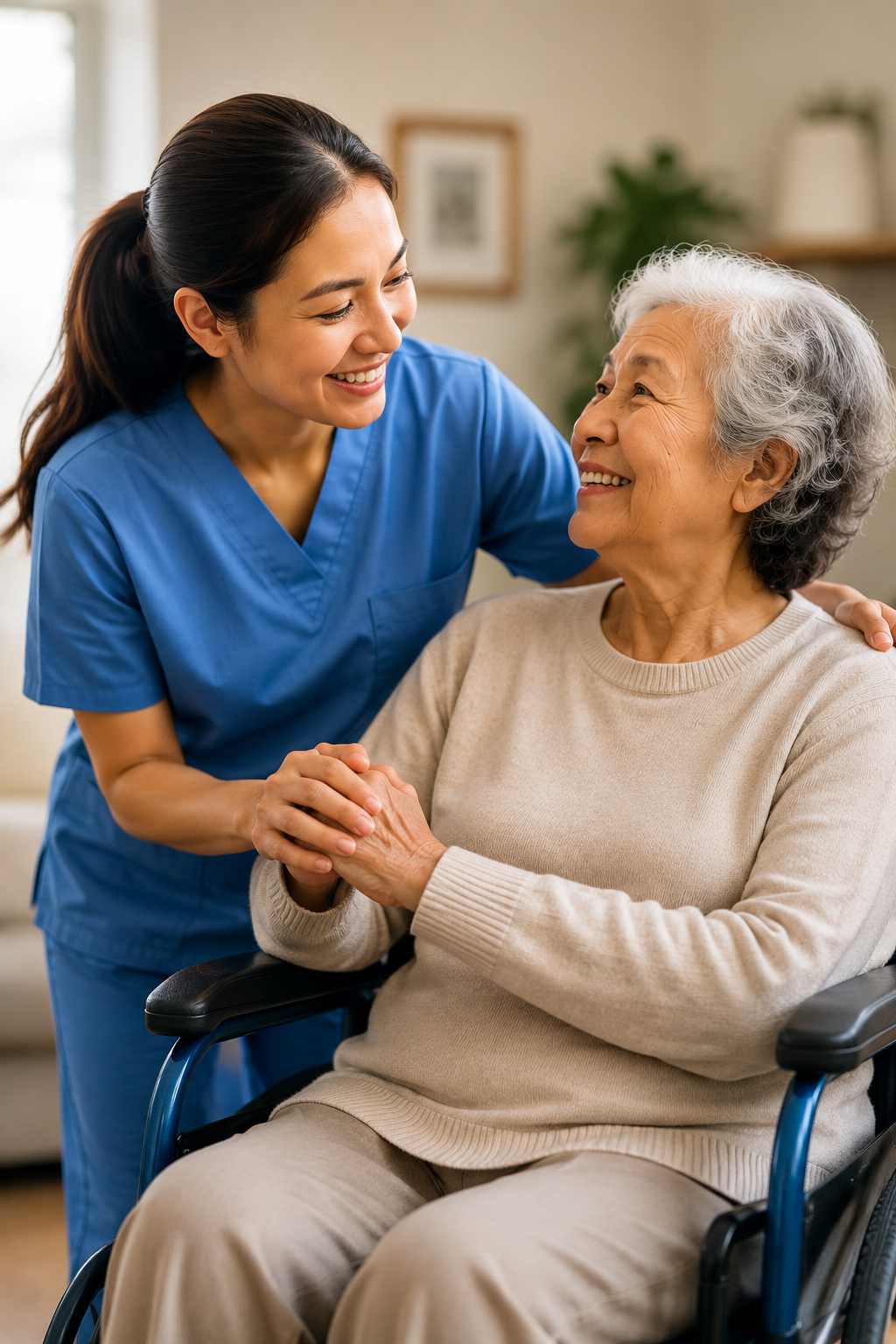
Prepare for a rewarding career in caregiving with Northbridge Institute of Caregiving’s Patient Care Assistant (PCA) Training Program. This comprehensive program is designed to equip aspiring caregivers with the essential knowledge, practical skills, and professional standards needed to provide safe, compassionate, and effective patient care in home care, assisted living, and healthcare support settings.

Program Overview
Caregivers are in growing demand across Europe, the United States, Canada, and other international markets. The Northbridge Patient Care Assistant Program provides practical, career-focused training to help you build essential caregiving skills, study online at your own pace, and prepare for care-related opportunities locally or abroad.
- 100% Online Learning
- Self-Paced Study Format
- Mobile & Desktop Accessible
- Video Lessons & Learning Resources
- Practical Caregiving Demonstrations
- Quizzes & Competency Assessments
- Certificate Upon Completion
Curriculum Overview
PCA 101 — Module 1: Foundations of Professional Caregiving
| Topic | Description |
|---|---|
| Module 1.1 — Introduction to Professional Caregiving | This lesson introduces the purpose and importance of professional caregiving. |
| Module 1.2 — Roles and Responsibilities of a Professional Caregiver | This lesson explains the duties, responsibilities, and limitations of the professional caregiver’s role. |
| Module 1.3 — Professional Ethics and Code of Conduct | This lesson introduces the ethical principles and standards of conduct expected in professional caregiving |
| Module 1.4 — Patient Rights, Privacy, and Confidentiality | This lesson examines the rights of patients receiving care. |
| Module 1.5 — Professional Appearance, Grooming, and Personal Hygiene | This lesson explains how professional appearance and personal hygiene contribute to patient safety, trust, and infection prevention |
| Module 1.6 — Effective Communication and Therapeutic Interpersonal Skills | This lesson focuses on clear, respectful, and professional communication with patients, families, caregivers, and healthcare professionals. |
| Module 1.7 — Cultural Competence and Respect for Diversity | This lesson explores how culture, language, religion, values, beliefs, family practices, and personal preferences may influence care. |
| Assessment |
PCA 102 —Module 2: Infection Control and Healthcare Safety
| Topic | Description |
|---|---|
| Module 2.1 — Understanding Infection and Disease Transmission | This lesson introduces the basic concepts of infection, microorganisms, disease transmission, and susceptibility. |
| Module 2.2 — The Chain of Infection | This lesson explains the major links involved in the spread of infection, including the infectious agent, reservoir, portal of exit, mode of transmission, portal of entry, and susceptible host. |
| Module 2.3 — Modes of Disease Transmission | This lesson examines the common ways infectious diseases spread. |
| Module 2.4 — Standard Precautions | This lesson introduces the infection-prevention practices that should be applied during routine care. |
| Module 2.5 — Hand Hygiene | This lesson explains when and how caregivers should clean their hands. |
| Module 2.6 — Personal Protective Equipment | This lesson introduces the basic use of gloves, masks, gowns, eye protection, and other Personal Protective Equipment. |
| Module 2.7 — Respiratory Hygiene and Cough Etiquette | This lesson covers practices that help reduce the spread of respiratory infections. |
| Module 2.8 — Cleaning and Disinfection of Patient Equipment | This lesson explains how patient-care equipment may contribute to infection transmission. |
| Module 2.9 — Environmental Cleaning and Healthcare Hygiene | This lesson focuses on maintaining a clean care environment. |
| Module 2.10 — Safe Handling of Soiled Linen and Laundry | This lesson explains how to handle used or contaminated linens safely. |
| Assessment |
PCA 103 —Module 3: Patient Mobility and Transfer Assistance
| Topic | Description |
|---|---|
| Module 3.1 — Principles of Safe Patient Mobility | This lesson introduces the fundamental principles of assisting patients with movement safely and effectively. |
| Module 3.2 — Body Mechanics and Ergonomics | This lesson explains how caregivers can protect themselves and their patients during physically demanding care activities. |
| Module 3.3 — Bed Mobility Techniques | This lesson focuses on assisting patients with movement and repositioning while in bed. |
| Module 3.4 — Patient Transfer Methods | This lesson examines safe techniques for moving patients between beds, chairs, wheelchairs, toilets, and other surfaces. |
| Module 3.5 — Ambulation Assistance | This lesson covers the safe support of patients during walking activities. |
| Module 3.6 — Use of Mobility Aids | This lesson introduces common assistive devices used to support movement and stability. |
| Module 3.7 — Fall Prevention | This lesson examines the identification and reduction of fall risks during caregiving activities. |
| Module 3.8 — Communication During Transfers | This lesson emphasizes the importance of clear, respectful, and coordinated communication during mobility assistance. |
| Module 3.9 — Documentation and Reporting | This lesson explains how to record and communicate mobility-related care accurately. |
| Module 3.10 — Infection Prevention During Patient Handling | This lesson focuses on preventing the spread of infection during mobility, repositioning, transfers, and ambulation. |
| Assessment |
PCA 104 —Module 4: Personal Care and Daily Living Assistance
| Topic | Description |
|---|---|
| Module 4.1 — Introduction to Personal Care and Activities of Daily Living | This lesson introduces personal care and the major activities of daily living. |
| Module 4.2 — Patient Dignity, Privacy, and Independence | This lesson explains how intimate personal care should be provided respectfully. |
| Module 4.3 — Preparing for Personal Care | This lesson covers the preparation required before beginning personal care. |
| Module 4.4 — Bathing and Personal Hygiene Assistance | This lesson introduces the principles of assisting with bathing and routine hygiene. |
| Module 4.5 — Bed Bath Assistance | This lesson focuses on assisting patients who cannot safely use a shower or bathtub. |
| Module 4.6 — Shower and Bath Safety | This lesson examines the prevention of falls and other injuries during bathing. |
| Module 4.7 — Oral Hygiene and Denture Care | This lesson explains how caregivers support toothbrushing, mouth care, and denture hygiene. |
| Module 4.8 — Hair, Shaving, Nail, and Grooming Assistance | This lesson covers routine grooming activities and their importance to comfort, dignity, confidence, and personal identity. |
| Module 4.9 — Dressing and Undressing Assistance | This lesson explains how to assist patients with selecting, putting on, and removing clothing. |
| Module 4.10 — Toileting Assistance | This lesson covers safe and respectful assistance with toilet use. |
| Assessment |
PCA 105 —Module 5: Vital Signs and Patient Observation
| Topic | Description |
|---|---|
| Module 5.1 — Introduction to Vital Signs and Patient Observation | This lesson introduces the purpose of vital signs and systematic patient observation. |
| Module 5.2 — Understanding Normal Baseline and Patient Trends | This lesson explains the importance of knowing a patient’s usual condition or baseline. |
| Module 5.3 — Body Temperature | This lesson introduces body temperature as an indicator of the body’s heat balance. |
| Module 5.4 — Measuring Body Temperature | This lesson explains the safe and accurate measurement of body temperature using approved equipment. |
| Module 5.5 — Pulse | This lesson introduces the pulse as a reflection of heart activity. |
| Module 5.6 — Measuring the Radial Pulse | This lesson covers the location and measurement of the radial pulse. |
| Module 5.7 — Respiratory Rate | This lesson introduces respiratory rate as the number of breaths taken within a specified period. |
| Module 5.8 — Measuring Respiratory Rate | This lesson explains how to measure respirations accurately. |
| Module 5.9 — Observing Breathing Quality | This lesson focuses on characteristics beyond respiratory rate. |
| Module 5.10 — Blood Pressure | This lesson introduces the basic meaning of blood pressure. |
| Assessment |
PCA 106 —Module 6: Elderly Care and Dementia Support
| Topic | Description |
|---|---|
| Module 6.1 — Understanding Ageing and Older Adult Care | This lesson introduces important principles of professional care for older adults. |
| Module 6.2 — Common Physical Changes Associated With Ageing | This lesson examines common changes that may occur in strength, balance, mobility, vision, hearing, skin, digestion, continence, sleep, and other areas of physical function. |
| Module 6.3 — Supporting Independence in Older Adults | This lesson explains how caregivers can provide only the level of assistance required while encouraging older adults to complete tasks they can safely perform themselves. |
| Module 6.4 — Promoting Dignity, Choice, and Person-Centred Care | This lesson focuses on respectful, individualized care. Learners examine privacy, preferences, routines, cultural identity, personal history, autonomy, consent, and involvement in decisions. |
| Module 6.5 — Communication With Older Adults | This lesson covers clear, respectful, and patient communication with older adults. |
| Module 6.6 — Vision and Hearing Changes | This lesson explains how changes in vision and hearing may affect communication, mobility, safety, and independence. |
| Module 6.7 — Mobility, Balance, and Fall Prevention | This lesson examines common mobility and balance concerns among older adults. |
| Module 6.8 — Nutrition and Hydration in Older Adults | This lesson covers nutrition and fluid support according to the individual’s care plan. |
| Module 6.9 — Toileting, Continence, and Elimination Support | This lesson explains how caregivers provide respectful assistance with toileting and continence needs. |
| Module 6.10 — Skin Care and Pressure Injury Prevention | This lesson focuses on protecting ageing and vulnerable skin. |
| Assessment |
Program Modules
Module 1 — Foundations of Professional Caregiving
Understand the role, responsibilities, ethics, patient rights, and professional standards expected of modern caregivers.
Module 2 — Infection Control and Healthcare Safety
Learn essential infection prevention procedures, workplace safety practices, hand hygiene, PPE usage, and emergency preparedness.
Module 3 — Patient Mobility and Transfer Assistance
Develop safe patient handling techniques, transfer methods, mobility support skills, and fall prevention practices.
Module 4 — Personal Care and Daily Living Assistance
Master personal care techniques including bathing, grooming, feeding, dressing, toileting assistance, and maintaining patient dignity.
Module 5 — Vital Signs and Patient Observation
Learn how to observe, monitor, document, and report patient conditions while recognizing important health indicators and warning signs.
Module 6 — Elderly Care and Dementia Support
Gain specialized knowledge in supporting older adults, understanding dementia, managing challenging behaviors, and providing compassionate care.
Program Outcomes
After successfully completing the Patient Care Assistant Program, learners should be able to:
- Provide respectful assistance with personal care and daily living activities
- Apply basic infection-prevention and safety practices
- Support safe mobility, positioning, and transfers
- Observe and report changes in a person’s condition
- Assist with nutrition, hydration, and home-care needs
- Communicate professionally with patients, families, and care teams
- Support older adults and individuals with disabilities while promoting dignity and independence
- Demonstrate foundational knowledge relevant to caregiving and patient-support roles
Actual duties, employment requirements, and permitted scope of work vary by country and employer.
Career Opportunities
Growing Demand for Caregivers Worldwide
Patient Care Assistant
Typical U.S. hourly pay: $17–$24
Caregiver
Typical U.S. hourly pay: $15–$22
Home Care Assistant
Typical U.S. hourly pay: $16–$22
Personal Support Worker
Typical U.S. hourly pay: $17–$24
Elderly Care Assistant
Typical U.S. hourly pay: $16–$23
Disability Support Assistant
Typical U.S. hourly pay: $18–$25
Pay figures are approximate U.S. market ranges, not guaranteed starting salaries. Actual wages, job titles, permitted duties, qualification requirements, and employment conditions vary by location and employer.
Patient Care Assistant (PCA) Official Transcript of Records
Students who successfully complete all modules and assessments will receive a Patient Care Assistant (PCA) official transcript of records issued by Northbridge Institute of Caregiving upon request with a corresponding fee.

Patient Care Assistant Certification Program
Program Fee: $249 $79
Delivery Format: 100% Online
Study Mode: Self-Paced Learning
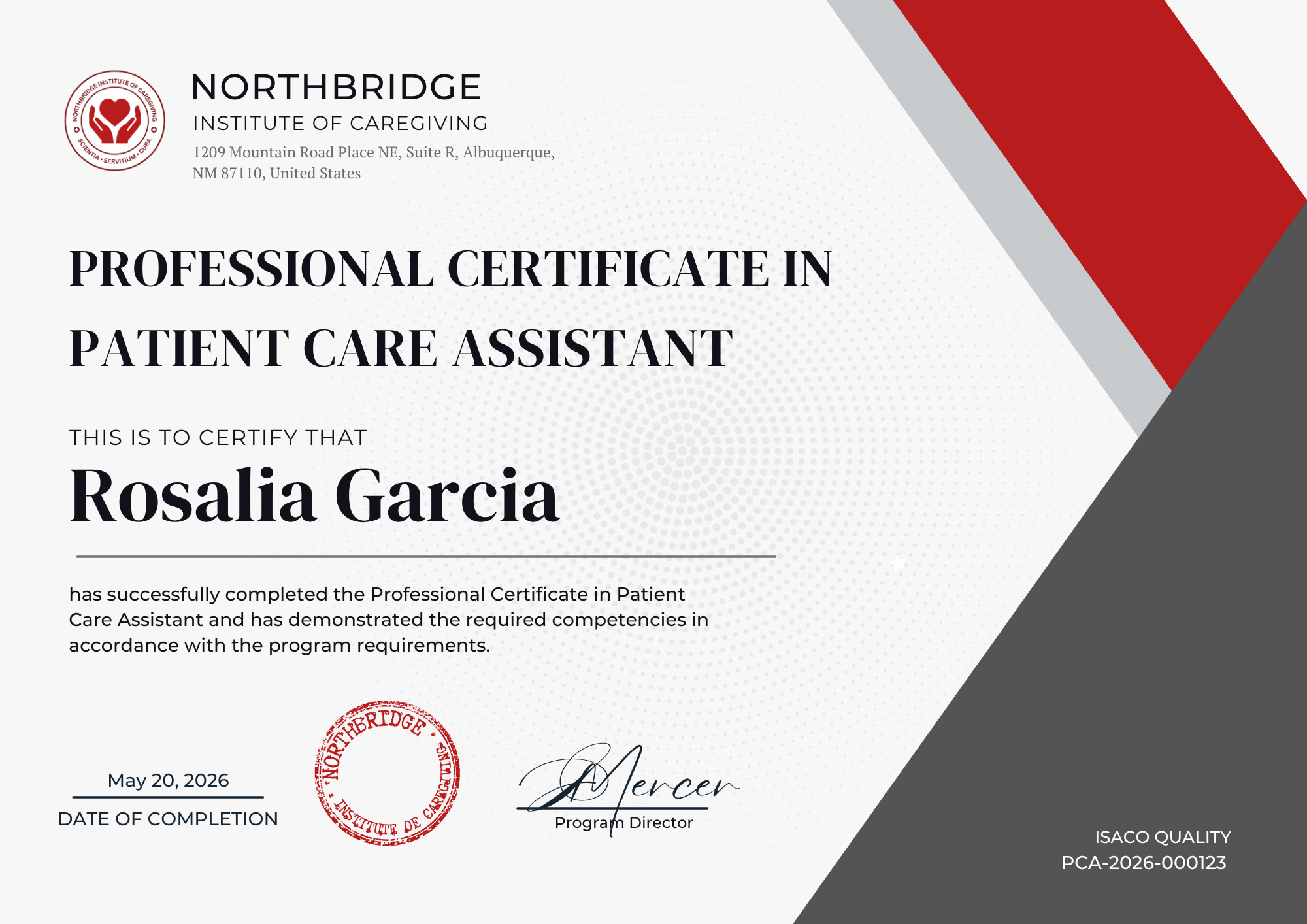
Certificate Awarded: Patient Care Assistant Certificate of Completion
★★★★★
This program equips aspiring caregivers with the essential knowledge, practical skills, and professional standards needed to provide safe, compassionate, and effective patient care in home care, assisted living, and healthcare support settings.